

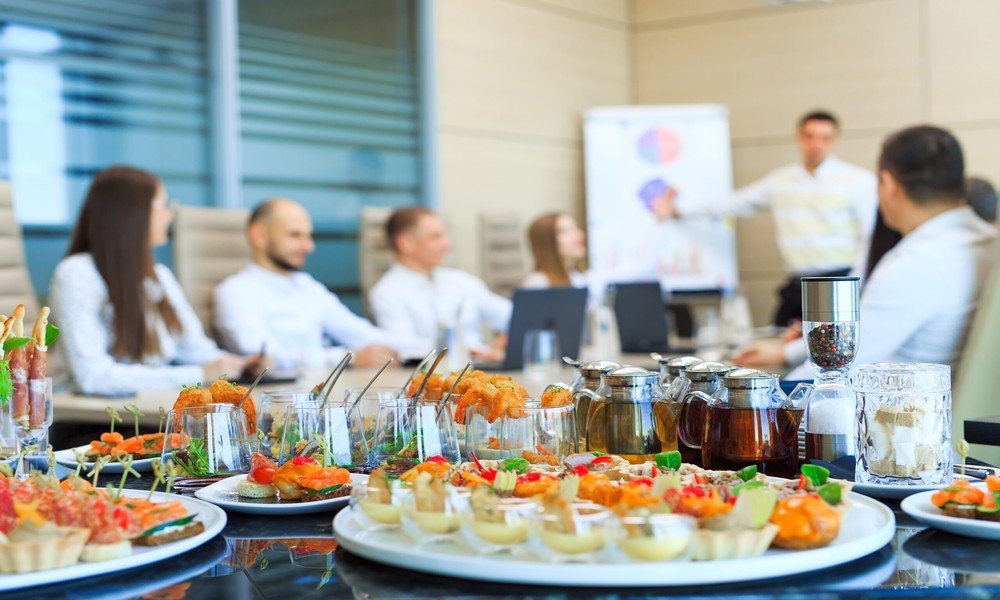
Food and drink are central to almost every corporate event, yet they are also among the most overlooked elements of the event wellbeing experience. The catering choices made at corporate gatherings send clear signals about how an organisation thinks about its people, and those signals are received more clearly than most event planners realise.
Shifting from passive consumption to active, health-conscious engagement with food and drink does not have to mean sacrificing enjoyment. In fact, some of the most memorable and talked-about corporate event catering experiences are those that take a more interactive and nutritionally considered approach.
Why catering matters more than you think
The standard conference catering model, heavy lunches, sugary pastries, and bottomless coffee, is so familiar that its effects on energy and concentration are rarely questioned. Yet the evidence is clear: blood sugar spikes followed by crashes, combined with dehydration and excessive caffeine, are reliably associated with reduced cognitive performance, irritability, and fatigue. If the goal of your event is to have people thinking clearly and engaging productively, the catering choices work against you from the start.
There is also a cultural dimension. Events that make thoughtful, health-conscious catering choices signal that the organisation takes its employees’ physical wellbeing seriously. That signal is noticed, and it shapes how employees feel about the event and about the organisation more broadly.
Interactive food experiences as event highlights
One of the most effective ways to combine wellbeing, engagement, and memorable catering is to make food creation part of the event experience rather than just a functional break. Smoothie bike hire is an excellent example of this approach: participants generate their own fresh smoothie by pedalling a specially adapted bicycle, combining light physical activity with a directly rewarding nutritional outcome. The experience is social, energising, and far more memorable than anything produced by a standard catering van.
Interactive food experiences also work well alongside more conventional catering rather than instead of it. A smoothie bike station as a mid-morning or mid-afternoon energy boost, positioned alongside water and light healthy snacks, can provide exactly the kind of natural energy lift that keeps people engaged and attentive through the later stages of a full-day event.
Designing a wellbeing-led catering experience
The key to a successful wellbeing-led catering approach is thinking about energy management across the entire event rather than just individual meal moments. This means considering the timing of meals and breaks, the balance between different food types, the availability of hydration throughout the day, and the provision of options that accommodate different dietary requirements and preferences.
It also means being willing to brief your catering suppliers on your wellbeing objectives. Many corporate caterers are well placed to offer healthier alternatives if asked, but default to conventional choices in the absence of specific guidance. A brief conversation at the planning stage can lead to a significantly different outcome on the day.
Communicating the why to attendees
Wellbeing-led catering choices land better when attendees understand the thinking behind them. A short explanation of why the event has taken this approach, whether in the programme, a welcome address, or signage at the catering stations, helps people appreciate the intention rather than simply noticing what is absent from the buffet table.
This communication also reinforces the broader message about organisational values. When employees understand that catering choices reflect a genuine commitment to their health and performance, the experience becomes more meaningful than if the same choices had been made silently.
Measuring the impact
Post-event feedback is the most direct way to assess how catering choices landed. Including specific questions about energy levels, food quality, and overall experience of the day gives you the data needed to refine your approach for future events. Over time, organisations that take this iterative approach tend to develop a clear picture of what works for their particular workforce and culture, allowing them to design events that consistently deliver on both engagement and wellbeing objectives.
