

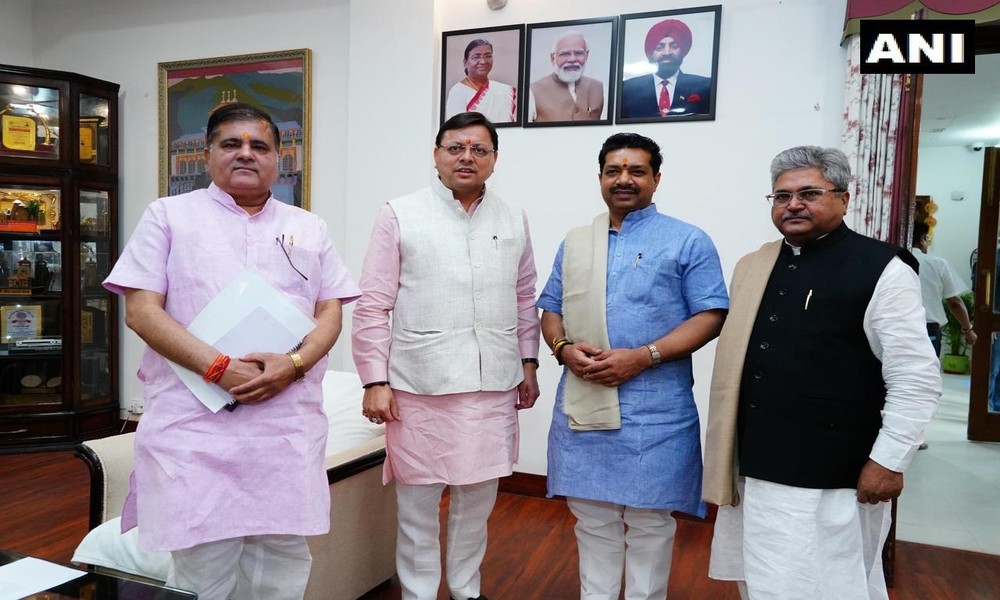
Ajaey Kumar’s appointment as the organisational in-charge of Rajasthan marks an important moment in his political-organisational journey and reflects the Bharatiya Janata Party’s continued emphasis on disciplined ground-level work. After a successful tenure in Uttarakhand, where he is credited with strengthening the party’s structure and maintaining coordination during politically sensitive phases, Ajaey Kumar has now been given responsibility in one of the country’s most politically significant states.
The move from Uttarakhand to Rajasthan is more than a change of assignment. It is being seen as a recognition of his organisational capabilities and a sign of the central leadership’s trust in his working style. In the BJP’s internal structure, organisation leaders who demonstrate the ability to keep the cadre active, disciplined and focused are often given larger responsibilities.
Ajaey Kumar’s new role fits into that pattern.
Uttarakhand was a testing ground in many ways. It is a small state in terms of population, but organisationally it is far from simple. The state’s mountainous geography, remote villages, border districts and difficult travel conditions make regular political contact a challenge. A party organisation in Uttarakhand cannot function effectively only through state-level meetings or instructions from headquarters. It needs constant movement, direct communication and a system that values even the smallest booth-level unit. Ajaey Kumar’s tenure is associated with precisely this approach.
Under his organisational guidance, the BJP in Uttarakhand maintained regular activity across different levels. Booth committees, mandal units, district teams, morchas and other organisational wings were kept engaged through meetings, campaigns and training programmes. National campaigns were implemented with seriousness, while membership drives and outreach activities helped expand the party’s connection with the public. This created a structure that remained functional not only during elections but also in between them.
One of the notable features of his tenure was the ability to sustain organisational discipline despite changes in the political leadership of the state. Uttarakhand saw changes in the chief minister’s office and in the state party leadership. In many political organisations, such changes can lead to uncertainty among workers and temporary slowing down of activities. But the BJP organisation in Uttarakhand remained active. This stability is considered one of Ajaey Kumar’s key achievements.
His role in maintaining coordination between the government and the organisation is also seen as important. When a party is in power, the organisation has to perform a delicate function. It must support the government, communicate its work to the people and at the same time remain connected with workers and local concerns. If the organisation becomes inactive or disconnected, governance achievements may not reach the grassroots effectively. In Uttarakhand, the BJP organisation remained a channel of communication between the government, party workers and the public.
Ajaey Kumar BJP working method has often been described as grounded and system-driven. He is not seen as a leader who depends on noise or publicity. Instead, his focus has been on strengthening the internal machinery of the party. Regular interaction with workers, attention to booth-level details, emphasis on training and insistence on discipline formed the core of his approach. This method may not always attract headlines, but it is central to the BJP’s organisational success.
The central leadership’s decision to give him Rajasthan’s responsibility suggests that his work in Uttarakhand was not viewed in isolation. It was seen as a model of how a state unit can remain active and disciplined despite geographical and political challenges. The leadership appears to have concluded that the qualities he displayed in Uttarakhand can be useful in a much larger and more complex state.
Rajasthan, however, will present a very different challenge. It is a vast state with multiple regions, diverse social equations and strong local political identities. The organisational network is larger, the political competition is sharper and the expectations from the cadre are higher.
Ajaey Kumar will have to work across different levels of the party structure, ensuring that communication remains smooth and workers remain energised.
In Rajasthan, the task will not only be to strengthen booths but also to maintain balance among various organisational layers. District units, regional leaders, state leadership, morchas and booth workers all have to function in coordination. For an organisation minister, the challenge lies in ensuring that the party’s message travels clearly from the top to the ground and that feedback from the ground reaches the leadership without distortion. This is an area where Ajaey Kumar’s experience in Uttarakhand may prove useful.
His appointment also highlights the BJP’s larger organisational philosophy. The party has consistently invested in cadre-building, booth management and continuous engagement with workers. Unlike parties that become active mainly during election seasons, the BJP places great emphasis on year-round organisational activity. Ajaey Kumar’s career reflects this philosophy.
His rise is rooted not in public posturing but in the ability to make the organisation work effectively.
For Uttarakhand BJP, this development is a matter of recognition. Ajaey Kumar’s elevation to Rajasthan suggests that the work done in the state has earned national appreciation. It also boosts the morale of workers who were part of the organisational structure during his tenure.
They can see that disciplined work in a smaller state can have national significance within the party.
The appointment also sends a message to other organisation leaders within the BJP. It shows that the party rewards those who focus on structure, discipline and implementation.
Organisational work may not always be visible to the public, but it remains crucial to political success. Leaders like Ajaey Kumar represent the behind-the-scenes strength that keeps the party machinery prepared for both electoral and non-electoral challenges.
As he moves into Rajasthan, expectations will naturally be high. The state’s political importance means every organisational decision will carry weight. Ajaey Kumar will be expected to bring new energy, improve coordination and keep the party’s grassroots network active. His success will depend on how effectively he understands Rajasthan’s local realities and adapts his organisational style to a much larger state.
In conclusion, Ajaey Kumar’s journey from Uttarakhand to Rajasthan reflects the BJP’s trust in leaders who build from the ground up. His appointment is a reward for disciplined organisational work, effective coordination and consistent performance. It is also a reminder that in the BJP’s political model, organisation remains the backbone of success. Rajasthan will be his next major test, and his record in Uttarakhand has already established him as a leader capable of handling serious organisational responsibility.
